15 Charcuterie Board Ideas for Any Occasion
2026-10-30

A beautiful charcuterie board can make any gathering feel special. With a mix of creamy cheeses, savory meats, fresh fruit, crunchy crackers, and a few sweet treats, you can create an inviting spread without spending hours in the kitchen. Whether you’re hosting a holiday party, planning a date night, or putting together an easy appetizer for friends, the best boards balance flavor, color, and texture.
The good news? You don’t need expensive ingredients or professional styling skills. Start with a few favorites, add contrasting flavors, and arrange everything so guests can serve themselves easily.
In this guide, you’ll find charcuterie board ideas for parties, holidays, date nights, meat-free gatherings, and dessert tables, along with a simple ingredient formula, portion-planning tips, pairing suggestions, and food-safety advice.
Jump to a recipe (15)
- 1. Classic Cheese and Charcuterie Board
- 2. Holiday Charcuterie Board
- 3. Brunch Charcuterie Board
- 4. Fruit and Cheese Board
- 5. Cozy Date-Night Board
- 6. Easy Party Appetizer Board
- 7. Meat-Free Charcuterie Board
- 8. Dessert Charcuterie Board
- 9. Cheese Board for Beginners
- 10. A Small Grazing Board for Two
- 11. Savory Mediterranean-Inspired Board
- 12. Sweet-and-Savory Fall Board
- 13. Salami Rose and Folded-Meat Board
- 14. Outdoor Picnic Charcuterie Board
- 15. Budget-Friendly Charcuterie Board
Quick Tips for Building a Charcuterie Board
- Mix textures: Combine creamy cheese, crisp crackers, juicy fruit, and crunchy nuts.
- Choose a few favorites: Two or three cheeses and one or two meats can be enough for a small board.
- Add color: Grapes, berries, apples, figs, olives, and colorful vegetables make the spread look abundant.
- Balance flavors: Pair rich or salty foods with something fresh, sweet, tangy, or crunchy.
- Arrange large items first: Place cheeses and bowls before filling the gaps with smaller ingredients.
- Plan for food safety: Keep perishable foods chilled until serving and replace small batches as needed.
What Goes on a Charcuterie Board?
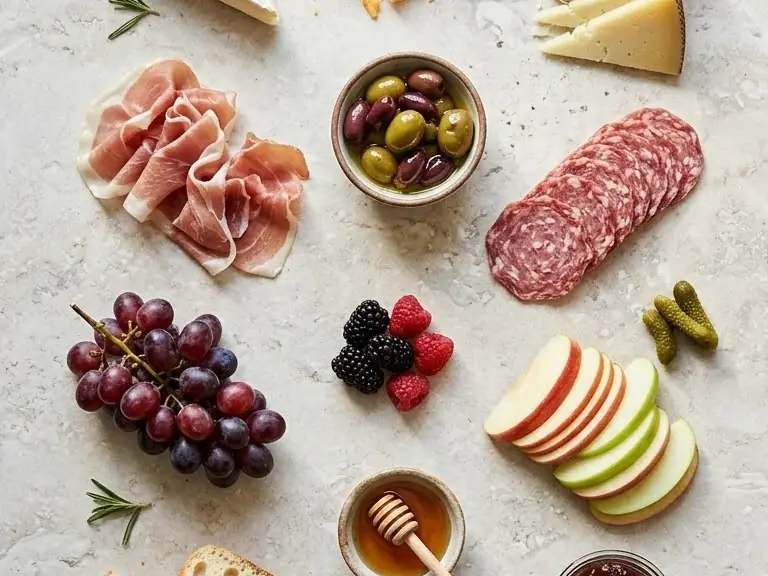
Traditional charcuterie focuses on prepared or cured meats. Today, the term is also commonly used for grazing boards that combine meats, cheeses, fruit, crackers, dips, and other small bites.
For a simple starter board, use this flexible formula:
- 2–3 cheeses: Choose different textures, such as Brie, cheddar, and goat cheese.
- 1–3 cured meats: Try prosciutto, salami, or soppressata.
- 2 fresh options: Grapes, berries, apple slices, pears, or vegetables.
- 1–2 crunchy bases: Crackers, sliced baguette, or flatbread.
- 1–3 extras: Olives, pickles, nuts, jam, honey, or chocolate.
Treat this as a guide rather than a strict recipe. A small snack board needs fewer choices than a party spread, and a meat-free board can replace cured meats with hummus, falafel, or other savory bites.
Best Charcuterie Board Ingredients
| Category | Ideas to Try | Why They Work |
|---|---|---|
| Soft cheese | Brie, goat cheese | Creamy texture and easy spreading |
| Firm cheese | Cheddar, manchego, Gouda | Easy to slice and pair |
| Cured meat | Prosciutto, salami, soppressata | Adds savory flavor and variety |
| Fresh fruit | Grapes, apples, pears, berries, figs | Brings color and freshness |
| Crunchy sides | Crackers, baguette, flatbread | Provides a base for toppings |
| Salty extras | Olives, pickles, marinated vegetables | Adds a tangy contrast |
| Sweet accents | Honey, jam, dried fruit, chocolate | Balances salty and sharp flavors |
| Crunchy extras | Almonds, walnuts, pistachios | Adds texture |
Choose a clean, food-safe serving surface that suits the amount of food you plan to serve. A wooden board, ceramic platter, rimmed tray, or marble slab can all work well.
How Much Food Do You Need Per Person?
The right amount depends on whether the board is a starter, a snack, or the main meal. For an appetizer, a practical starting estimate is about 2–3 ounces each of cheese and meat per person. Increase the amount if the board is replacing dinner or if few other foods will be served.
| Food | Starting Estimate Per Person | Planning Tip |
|---|---|---|
| Cheese | 2–3 ounces | Offer a mix of textures |
| Cured meat | 2–3 ounces | Adjust based on the other dishes |
| Nuts | 2–3 tablespoons | Serve in a small bowl |
| Crackers or bread | 4–6 ounces | Include more than one style |
| Vegetables | 4–8 ounces | Cut into easy-to-grab pieces |
These are planning estimates, not fixed serving rules. Appetite, age, event length, and the rest of the menu can change how much people eat. If you’re serving dips as a substantial part of the spread, plan those separately and adjust the rest of the ingredients accordingly.
For a dinner-style grazing board, add more filling foods, such as bread, vegetables, dips, cheese, and suitable protein options. For a pre-dinner appetizer, a smaller selection is usually enough.
1. Classic Cheese and Charcuterie Board
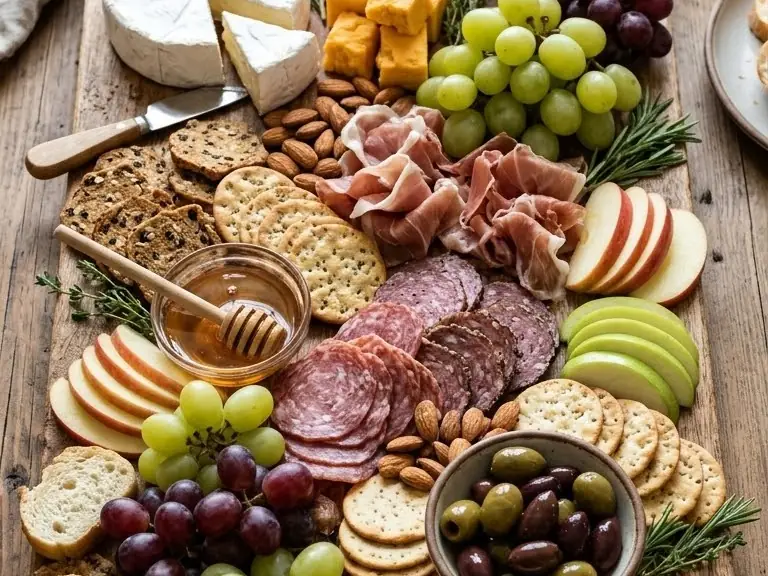
A classic board is an easy choice for birthdays, casual get-togethers, and weekend entertaining. Choose a soft cheese, a firm cheese, one or two cured meats, crackers, fruit, and a few savory extras.
Try this combination:
- Brie and sharp cheddar
- Prosciutto and salami
- Grapes and apple slices
- Crackers and sliced baguette
- Olives and a small bowl of nuts
- Honey or fruit preserves
Arrange each ingredient in a separate cluster so guests can see the options. Leave a little space around bowls and serving utensils, and put crackers where people can reach them easily.
2. Holiday Charcuterie Board
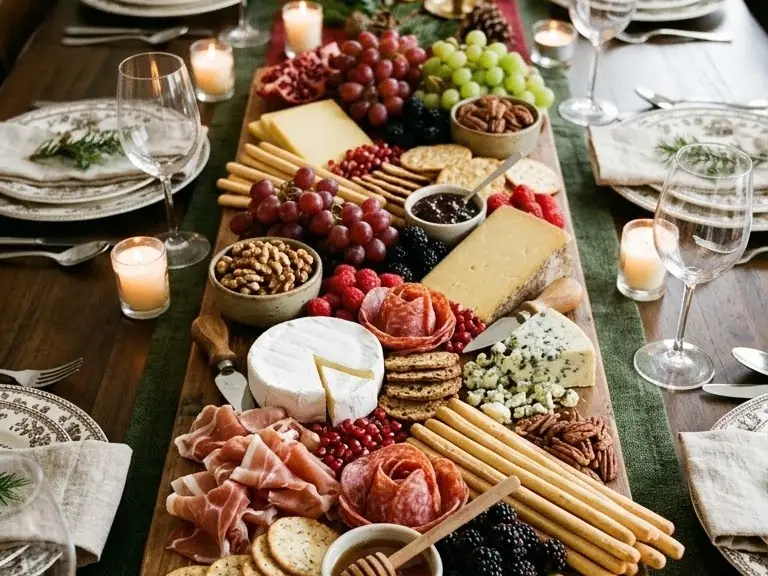
A holiday board can feel festive without requiring an entirely different menu. Use seasonal colors, a themed arrangement, or a few special treats while keeping familiar cheeses and savory bites at the center.
| Occasion | Color or Shape Idea | Ingredients to Consider |
|---|---|---|
| Valentine’s Day | Red, pink, and white | Strawberries, raspberries, Brie, chocolate |
| Easter | Pastel colors | Berries, mild cheeses, crackers |
| Fourth of July | Red, white, and blue | Strawberries, blueberries, white cheese |
| Halloween | Orange and dark accents | Cheddar, dark grapes, crackers, themed sweets |
| Thanksgiving | Autumn colors | Pears, figs, grapes, nuts, seasonal cookies |
| Christmas | Tree or wreath shape | Green grapes, rosemary, cheese, salami |
| New Year’s Eve | Elegant, party-ready bites | Aged cheese, olives, fruit, savory crackers |
Christmas Tree or Wreath Board
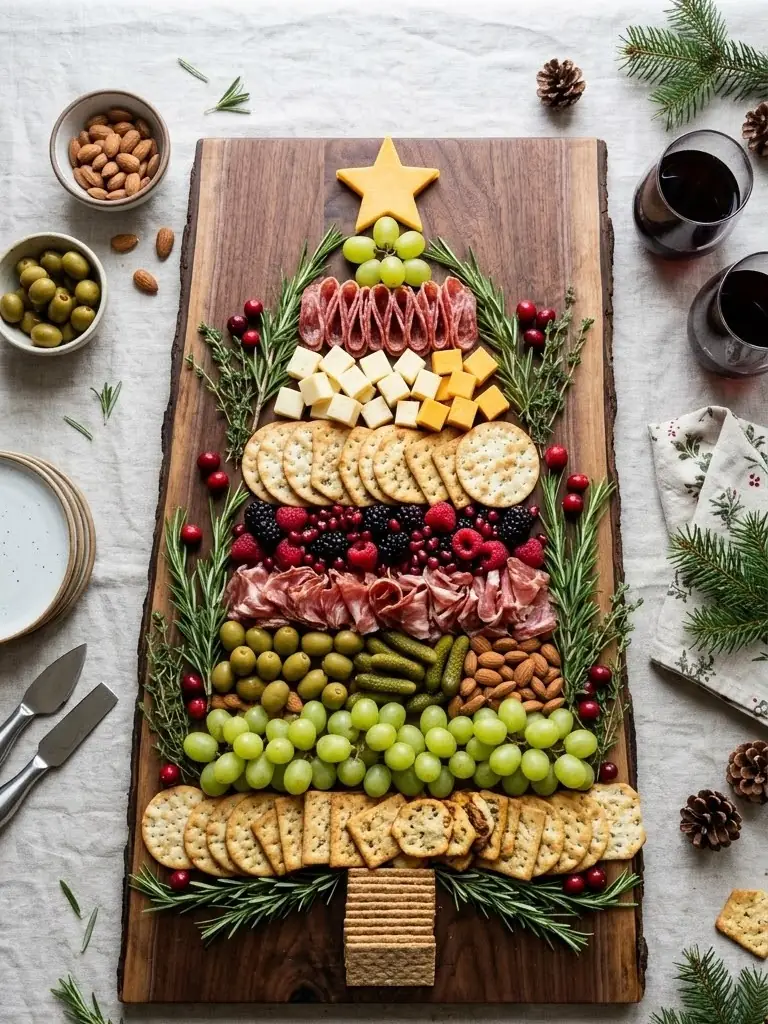
For a Christmas tree board, arrange rows of cheese, meat, grapes, and crackers into a triangular shape. Use a small piece of cheese or fruit as the topper. For a wreath, place ingredients in a ring around a small bowl of dip.
Keep the design simple enough that guests can still reach the food. A few seasonal details usually look more polished than making every ingredient part of the theme.
Thanksgiving Charcuterie Board
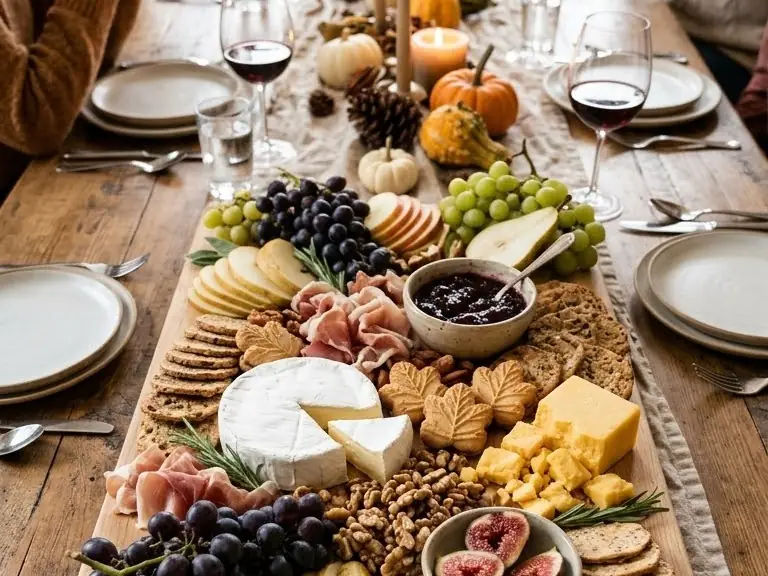
Build a fall-inspired spread with pears, apples, figs, grapes, sharp cheese, nuts, crackers, and a small dish of jam. Add a few autumn-colored cookies if you want a sweet touch. The mix of warm colors and familiar flavors makes this style suitable for a pre-dinner snack or a holiday gathering.
3. Brunch Charcuterie Board
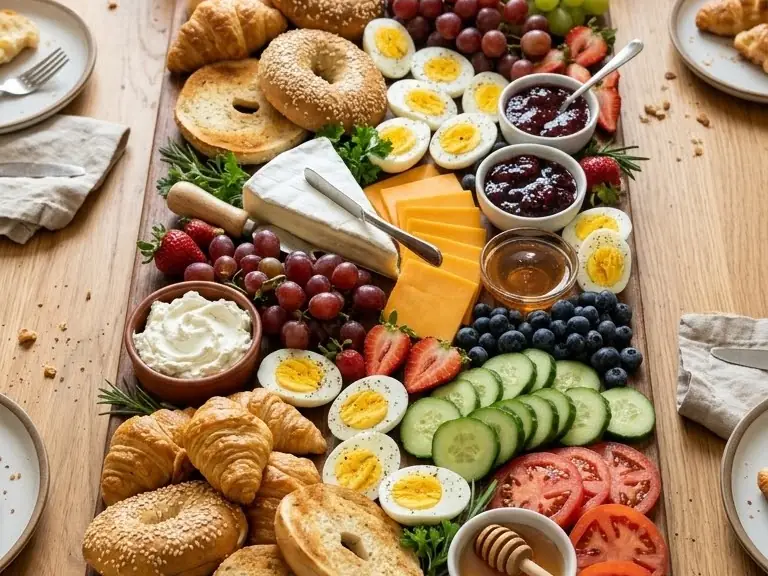
A brunch board is ideal for a relaxed weekend meal or a holiday morning. Mix sweet and savory foods so guests can build a light breakfast or a more filling plate.
Include a mix of:
- Mini croissants or sliced bagels
- Cheddar, Brie, or cream cheese
- Strawberries, blueberries, and grapes
- Hard-boiled eggs
- Cucumber and tomato slices
- Jam, honey, or a small bowl of yogurt dip
Keep breads separate from moist fruit and dips until serving so they stay fresh. If the board includes eggs or dairy-based dips, keep them chilled until you’re ready to serve.
4. Fruit and Cheese Board
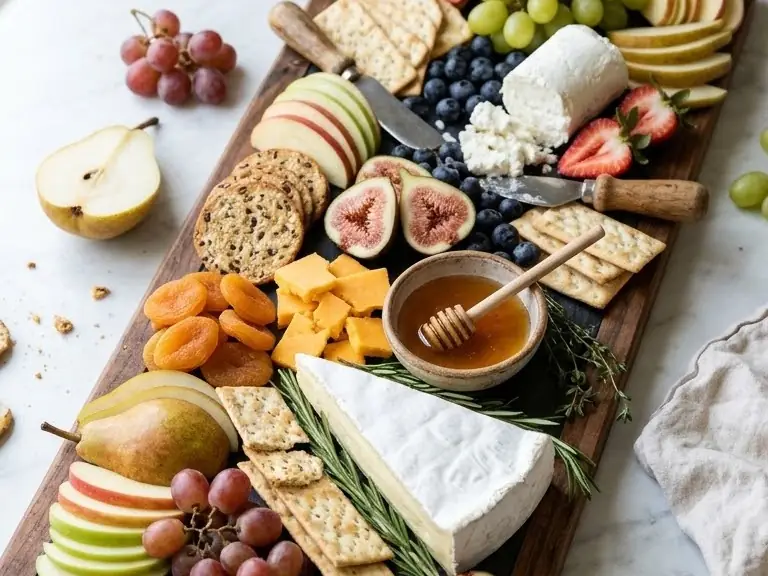
For a lighter, colorful option, let fresh fruit and cheese take center stage. This is a good choice for guests who prefer less meat or for an afternoon snack.
Pair apples or pears with sharp cheddar, grapes with Gouda, and figs with goat cheese. Add berries, dried apricots, crackers, and a small dish of honey or preserves to round out the board.
Wash fruit before arranging it and dry it well. Slice apples and pears close to serving time to help prevent browning and excess moisture.
5. Cozy Date-Night Board
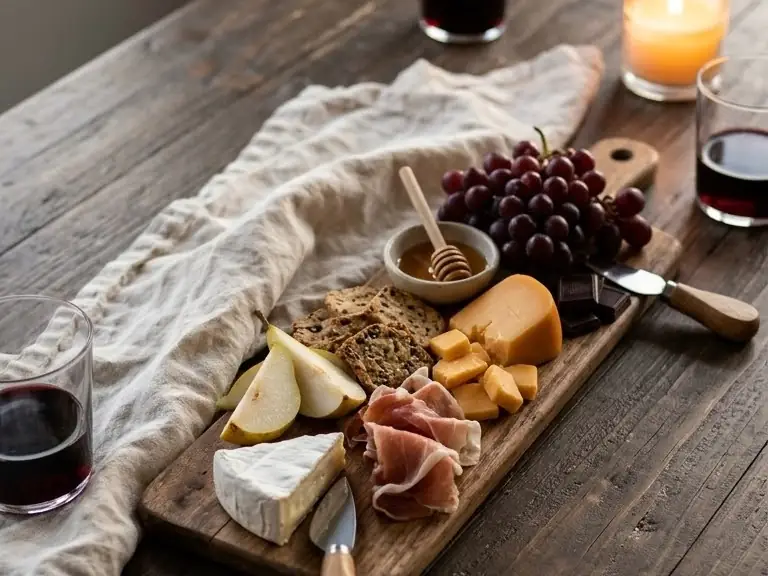
A date-night board should feel thoughtful without becoming a large party project. Choose two or three cheeses, one cured meat or a savory meat-free alternative, fresh fruit, crackers, and a small chocolate treat.
An easy date-night combination:
- Brie and Gouda
- Prosciutto or marinated artichokes
- Pear slices and grapes
- Crackers or toasted baguette
- Dark chocolate and a small bowl of honey
Keep the selection compact and place everything within easy reach. If you want a sweet-and-savory board, group dessert items at one end so you can enjoy them later.
6. Easy Party Appetizer Board
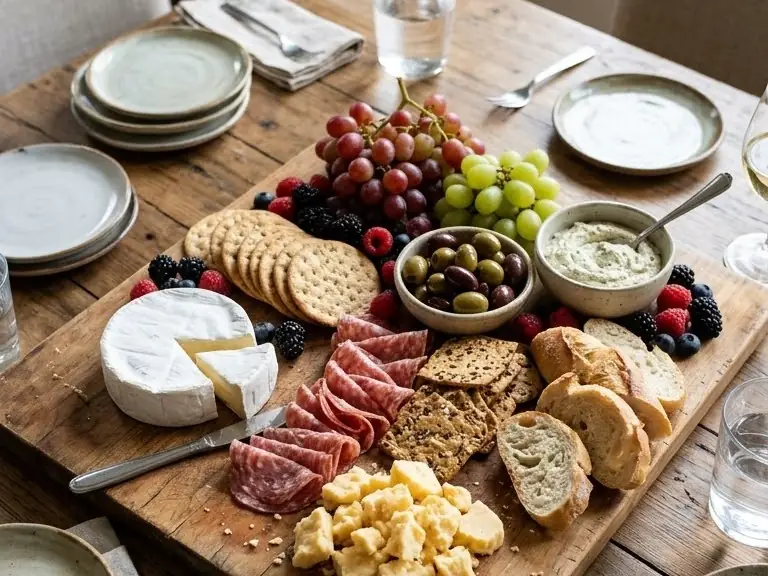
When guests are arriving soon, choose ingredients that need very little preparation. A party board can look generous without requiring lots of different foods.
Start with two cheeses, one or two meats or savory alternatives, crackers, fruit, and a dip or condiment. Use ready-to-serve ingredients where possible, and slice only what needs slicing.
For a larger gathering, several smaller boards or serving stations may work better than one oversized platter. Keep napkins, small plates, and serving utensils nearby so guests can move around comfortably.
7. Meat-Free Charcuterie Board
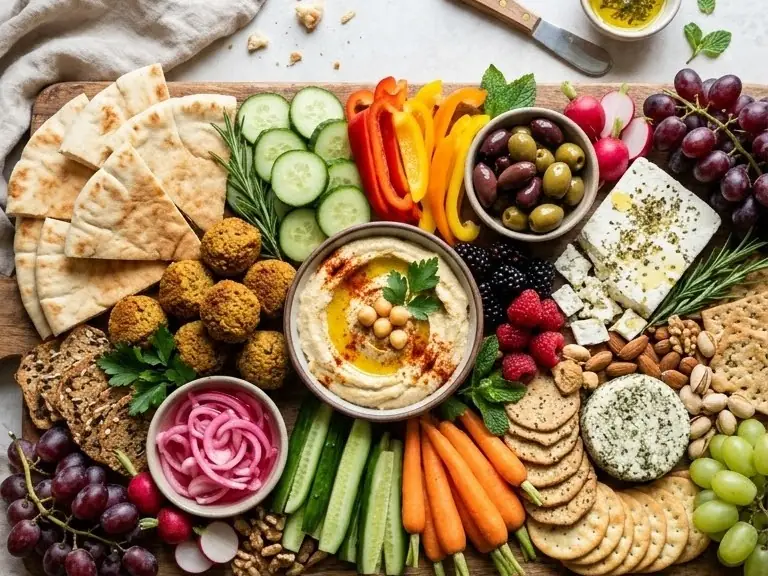
A meat-free grazing board can be just as varied and satisfying as a traditional one. Build it around cheese or plant-based cheese, dips, vegetables, bread, and savory bites.
Ingredient ideas:
- Hummus or white-bean dip
- Falafel or marinated chickpeas
- Vegan cheese or regular cheese, depending on your guests
- Pita, crackers, or sliced baguette
- Cucumber, bell peppers, and carrots
- Olives and pickled vegetables
- Grapes, berries, or apple slices
- Nuts or roasted seeds
For a fully plant-based board, check the labels on cheeses, dips, crackers, and other packaged foods. If you’re serving both meat-free and meat-based foods, use separate sections and serving utensils to reduce accidental mixing.
8. Dessert Charcuterie Board

A dessert board turns bite-size sweets into a centerpiece for birthdays, holidays, movie nights, or casual celebrations. Mix soft, crisp, and chewy textures so the spread offers more than one kind of treat.
Try strawberries, grapes, cookies, chocolate squares, pretzels, marshmallows, mini brownies, and a small bowl of chocolate or caramel dip. Use small bowls for loose sweets and dips, and leave room for guests to reach each item without disturbing the rest.
Because dessert boards can contain a wide range of packaged treats, check labels for common allergens and keep items separate when necessary.
9. Cheese Board for Beginners
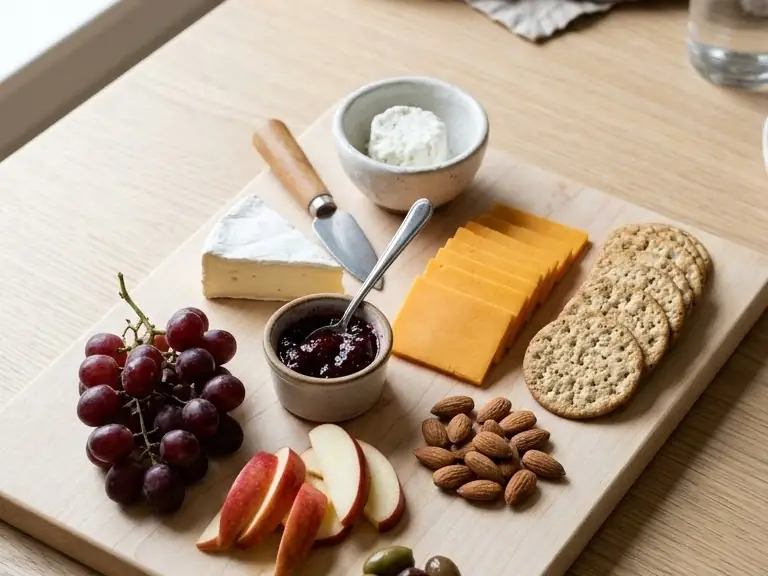
If you’re new to making a board, focus on three different cheese styles rather than buying a large selection.
| Cheese Style | Example | Easy Serving Method |
|---|---|---|
| Soft | Brie | Add a few starter cuts |
| Spreadable | Goat cheese | Serve with a small cheese knife |
| Firm | Sharp cheddar or manchego | Pre-slice or cut into cubes |
Add crackers, one fresh fruit, one savory extra, and a small sweet accent. This simple mix is easy to shop for and gives guests a choice of flavors and textures.
Put a separate knife beside soft cheese to make serving easier. If a cheese is unfamiliar, a small label can help guests identify it.
10. A Small Grazing Board for Two
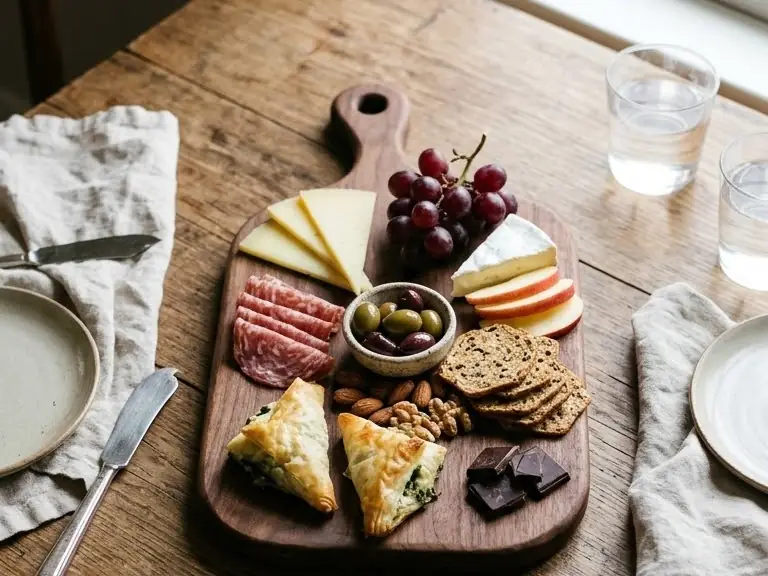
You don’t need a large platter to create a beautiful spread. For two people, choose a few ingredients you already enjoy and arrange them on a small tray or plate.
Try one soft cheese, one firm cheese, a few slices of salami or a meat-free alternative, grapes, apple slices, crackers, olives, and a little chocolate. A compact board is easier to prepare, reduces leftovers, and works well for a picnic or relaxed evening at home.
11. Savory Mediterranean-Inspired Board
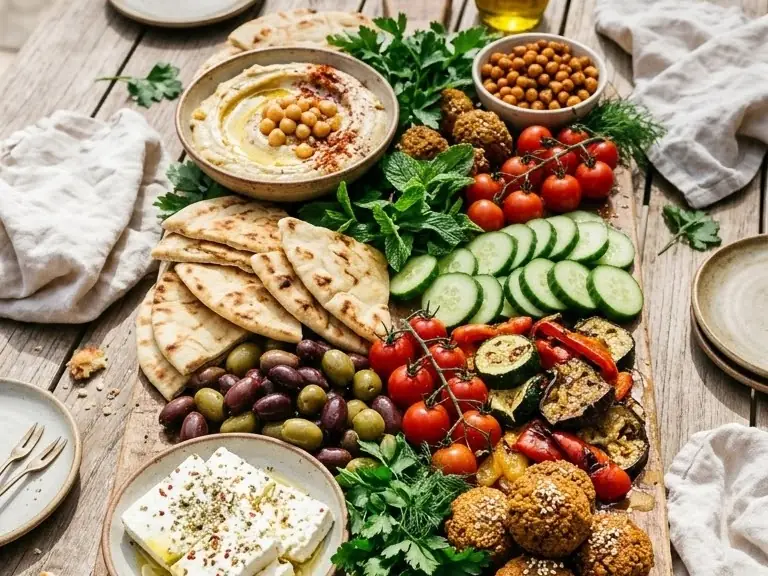
For a savory board with bright, tangy flavors, combine hummus, pita, olives, cucumbers, cherry tomatoes, feta, and roasted vegetables. Add falafel or chickpeas if you want a more filling spread.
Keep dips in bowls and group wet ingredients away from crackers or bread. This arrangement works well for casual lunches, outdoor gatherings, and guests who enjoy vegetables and savory snacks.
12. Sweet-and-Savory Fall Board
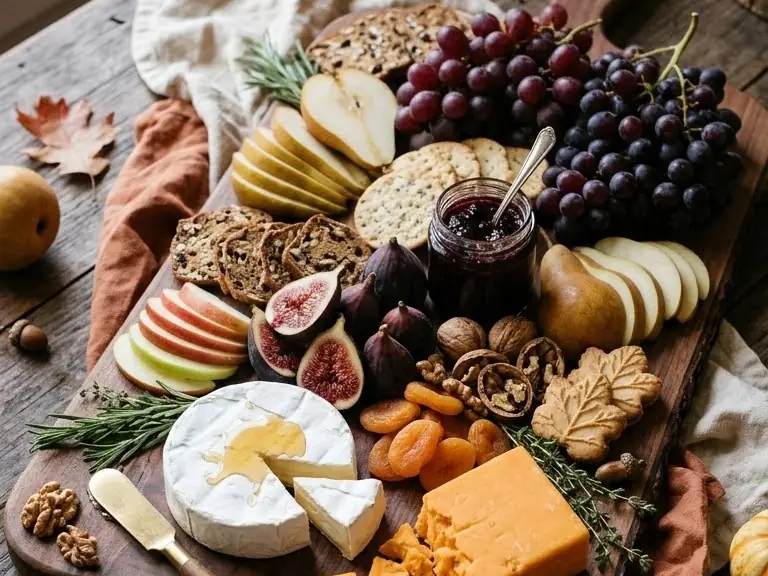
Fall produce brings natural color and seasonal flavor to a grazing board. Use apple and pear slices, grapes, figs, sharp cheddar, Brie, crackers, nuts, and a small bowl of fruit preserves.
For extra seasonal character, add dried apricots or a few maple cookies. Keep the sweet items as accents so the board still works as an appetizer rather than turning into a dessert platter.
13. Salami Rose and Folded-Meat Board
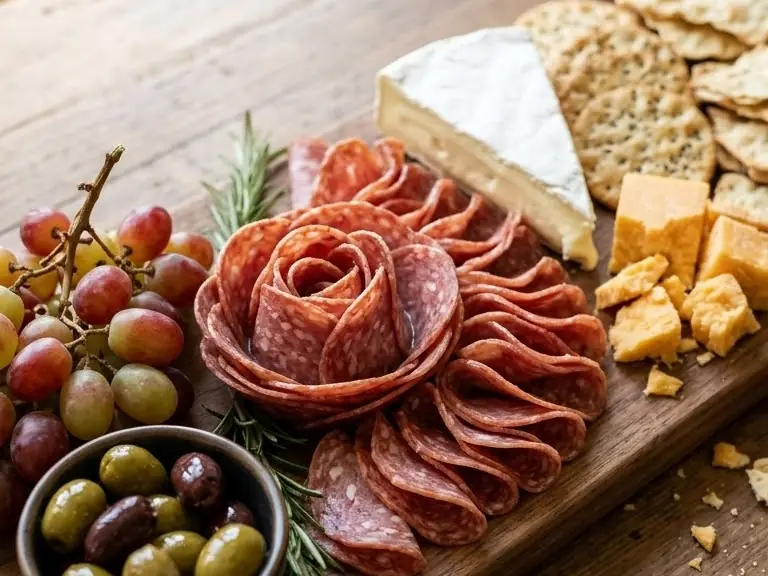
A few simple folds can make a board look more polished without adding extra ingredients. Fold thin salami slices into quarters and arrange them in a curved line. For a rose, overlap several thin slices and roll them together into a flower-like shape.
Use one decorative feature rather than styling every ingredient. Place the folded meat near cheese and crackers, and leave enough room around it for guests to pick up individual slices.
14. Outdoor Picnic Charcuterie Board
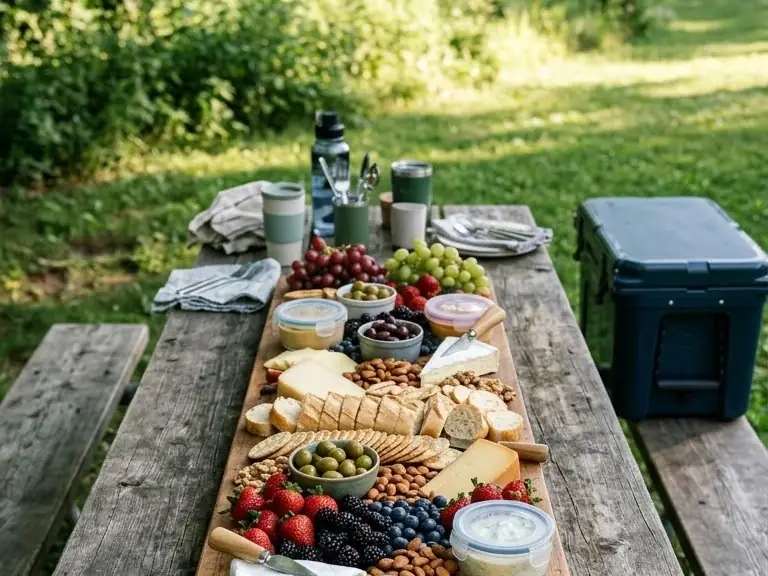
For a picnic, prioritize ingredients that travel well and keep perishable foods cold. Pack crackers, bread, nuts, and other shelf-stable items separately from cheese, dips, and refrigerated meats.
Use an insulated cooler or thermal bag with ice packs, and keep perishable foods at 40°F (4°C) or below during transport. At the picnic site, set out only the amount you expect to eat soon and keep the rest chilled.
A lidded container can make transport easier than a fully assembled open board. Arrange the food once you reach your destination, preferably in a shaded spot away from direct sunlight.
15. Budget-Friendly Charcuterie Board
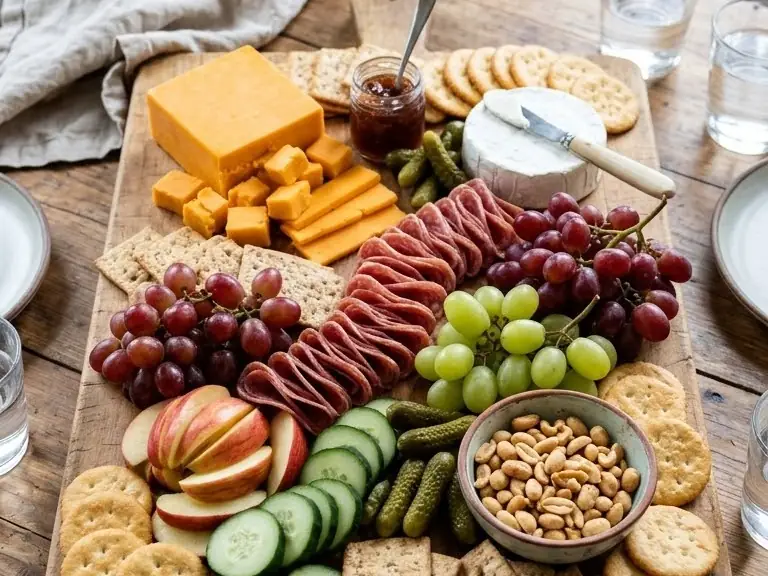
A beautiful board doesn’t need specialty ingredients. Choose a few familiar grocery-store options and make the spread feel varied through color, texture, and arrangement.
Budget-friendly ingredients include:
- One block of cheddar and one soft cheese
- Salami or a savory meat-free alternative
- Seasonal fruit
- Crackers or sliced baguette
- Carrots or cucumber
- Olives or pickles
- Peanuts or another affordable nut, if suitable for your guests
- Jam or a small amount of chocolate
Buying fewer ingredients in larger usable portions can simplify shopping and reduce waste. Plan the main items before going to the store, then add an optional treat only if it fits your budget.
Which Cheese and Food Pairings Work Best?
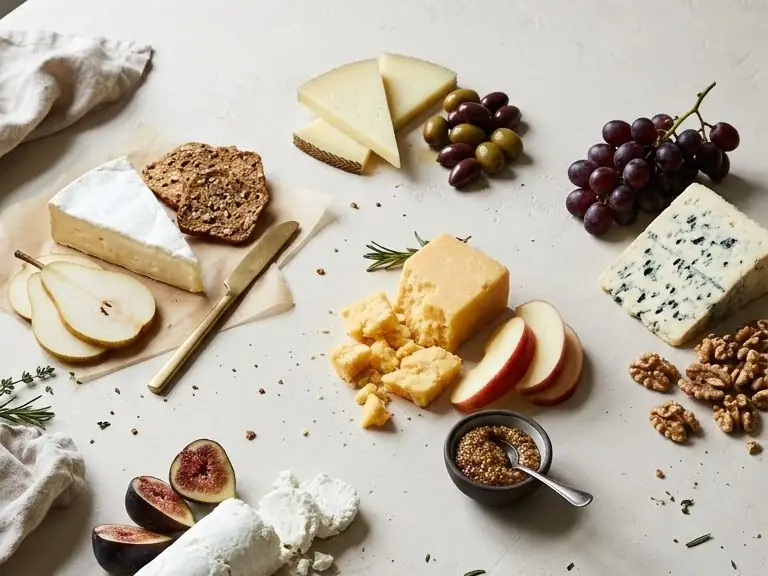
A good pairing balances a rich, salty, or sharp ingredient with something sweet, fresh, tangy, or crunchy. Use these combinations as starting points and adjust them to suit your taste.
| Cheese | Sweet or Fresh Pairing | Savory or Crunchy Pairing |
|---|---|---|
| Brie | Apple, pear, fruit preserves | Prosciutto, crackers |
| Sharp cheddar | Apple, strawberries | Salami, mustard, pickles |
| Goat cheese | Figs, apricots | Almonds, roasted vegetables |
| Gorgonzola | Grapes, honey | Walnuts, pistachios |
| Manchego | Pear, quince paste | Olives, salami |
| Gouda | Apple, grapes | Walnuts, pickled vegetables |
| Havarti | Pear, apple | Soppressata, dill pickles |
You don’t need to pair every ingredient with several others. Include a few familiar combinations, such as cheddar and apple or Brie and crackers, so guests have an easy place to start.
How to Arrange a Charcuterie Board
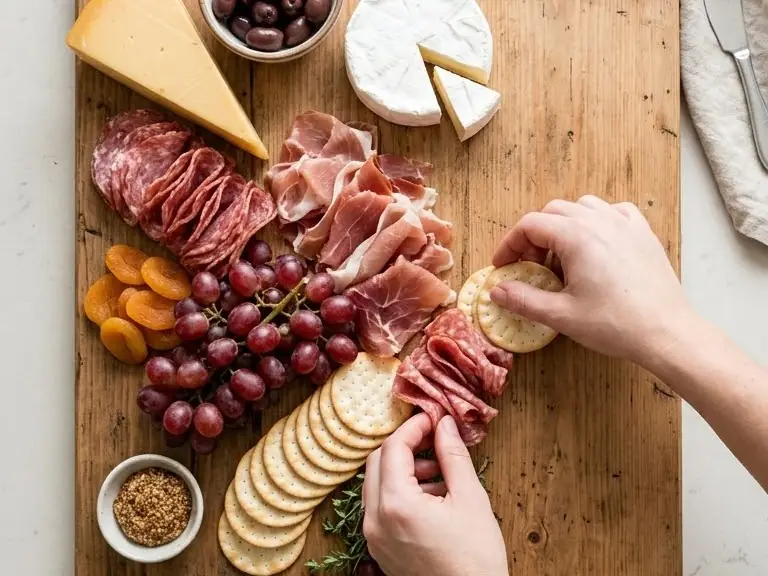
You can create a balanced-looking board by arranging the larger ingredients first and filling the open spaces gradually.
- Choose the board: Use a food-safe tray or platter with enough room for the food and serving utensils.
- Place the anchors: Add cheeses and small bowls of dip, olives, nuts, or jam.
- Arrange the meats: Fold or loosely group slices so each variety is easy to identify.
- Add fruit and vegetables: Spread color across the board instead of putting all the produce in one corner.
- Add crackers and bread: Place them where guests can reach them without moving other foods.
- Fill small gaps: Use dried fruit, nuts, chocolate, or other small bites to complete the arrangement.
- Check access: Make sure bowls, utensils, and popular ingredients are easy to reach.
Styling Tips That Make a Difference
- Group similar ingredients together instead of scattering every item across the board.
- Repeat one ingredient in two small clusters if that creates a more balanced layout.
- Keep crackers away from wet fruit and dips so they stay crisp.
- Leave breathing room around bowls and serving utensils.
- Use color and texture rather than buying lots of expensive ingredients.
- Put out labels when guests may not recognize a cheese or need to check ingredients.
How to Keep a Charcuterie Board Fresh and Safe
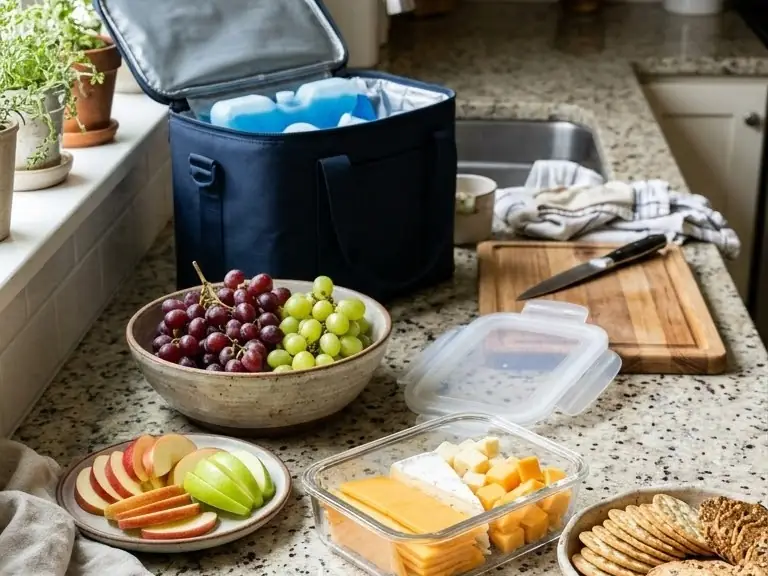
Cheese, cut produce, dips, and many meats are perishable. Keep them refrigerated until you’re ready to assemble the board, and avoid leaving them at room temperature for too long.
As a general food-safety rule, perishable foods should not sit at room temperature for more than 2 hours total, or 1 hour when the temperature is above 90°F (32°C). Follow the storage instructions on product labels and local food-safety guidance.
Prepare Ahead Without Losing Freshness
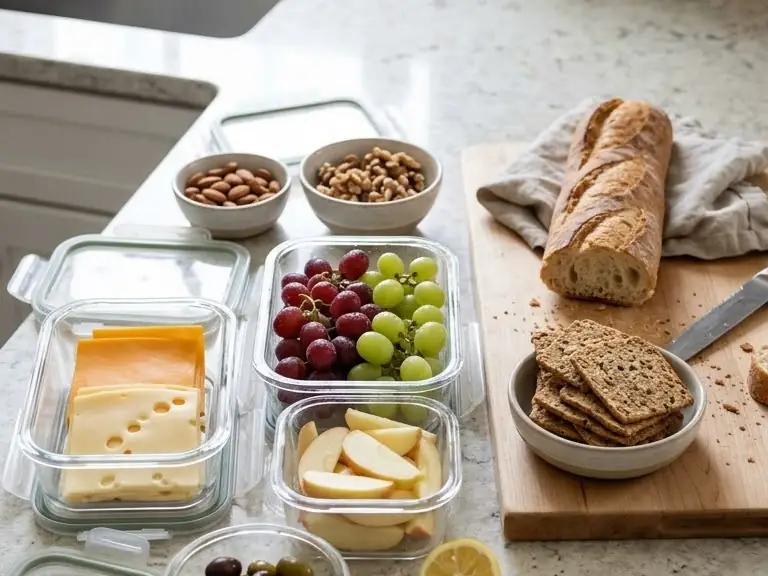
- Wash and thoroughly dry produce before cutting.
- Cut cheese and fruit ahead of time if needed, then store them in covered containers in the refrigerator.
- Keep crackers and bread separate until serving.
- Put perishable foods on the board shortly before guests arrive.
- Serve smaller portions and replenish them with fresh, chilled food as needed.
- Use a separate clean utensil for each dip and condiment.
- Refrigerate suitable leftovers promptly; discard food that has been held outside safe time limits.
For outdoor events, transport perishable foods in an insulated cooler with ice packs and keep them at 40°F (4°C) or below. Avoid placing the board in direct sunlight or near a heat source.
Can You Make a Charcuterie Board Ahead of Time?
Yes. Prepare individual ingredients in advance, but wait until close to serving time to assemble the full board.
You can wash fruit, portion nuts, slice suitable cheeses, and prepare dips ahead of time. Store perishable ingredients in covered containers in the refrigerator. Keep crackers and bread separate so they don’t become soft, and add delicate fruit shortly before serving.
Conclusion: Create a Board That Fits Your Occasion
The best charcuterie board is one that suits your guests, your budget, and the occasion. Start with a few cheeses or savory bites, add fresh produce and something crunchy, then finish with a sweet or tangy accent. You can keep it simple for date night, style it around a holiday, or make several smaller boards for a party.
Before shopping, choose your occasion and write down three ingredients you know you enjoy. Build around them with a fresh option, a crunchy base, and a few contrasting flavors. With a little planning, you can create a welcoming spread without making preparation complicated.
Frequently Asked Questions
What should a beginner put on a charcuterie board?
Start with two or three cheeses, one or two cured meats or savory alternatives, crackers, fresh fruit, and one or two extras such as olives, nuts, honey, or jam. Choose foods that are easy to serve and that you already enjoy.
Can I make a charcuterie board the night before?
You can prepare many ingredients the night before, but store perishable items in covered containers in the refrigerator and assemble the board close to serving time. Keep crackers and bread separate to help them stay crisp.
How do I stop apple slices from turning brown?
Cut apples close to serving time when possible. A light coating of lemon juice can slow browning; blot away excess moisture before arranging the slices so nearby crackers don’t become damp.
What can I use instead of crackers?
Try sliced baguette, flatbread, pita, cucumber rounds, or apple slices. Choose a base that works with the toppings and meets your guests’ dietary needs. Keep alternatives in separate areas so they’re easy to find.
How do I make a charcuterie board for guests with allergies?
Read the labels on packaged ingredients, label dishes clearly, and keep foods that need to remain separate in their own dishes with dedicated serving utensils. Be aware that ingredients and allergen warnings vary by product. For severe allergies, take extra care to prevent cross-contact.
Can a charcuterie board be served as dinner?
Yes. Increase the quantities beyond appetizer portions and include filling options such as bread, cheese, vegetables, dips, and suitable protein choices. Plan the amount around the number of guests and any other food being served.
What can I use instead of meat?
Try hummus, falafel, chickpeas, olives, nuts, pickled vegetables, roasted vegetables, or plant-based meat alternatives. Combine several textures and savory flavors so the board feels satisfying.
How long can a charcuterie board sit out?
As a general rule, perishable foods should not remain at room temperature for more than two hours total, or one hour when the temperature is above 90°F (32°C). Keep food chilled before serving and replenish the board with fresh, cold portions during longer gatherings.